Roof repair in Sugar Hill: why 80% of leaks start at joints and flashing (and how to fix them early)
Water dripping from your living room ceiling during a heavy Georgia thunderstorm usually causes instant panic. Most homeowners assume they are on the hook for a $15,000 replacement. In reality, eight out of ten residential leaks start at small metal seams and dried-out rubber vent boots that take only a few hours to fix. In this guide, you will discover how to trace hidden water paths through your attic, avoid the common caulk mistakes that trap moisture, and find out whether a simple, targeted roof repair is all your home needs before the next storm season arrives.
TL;DR: Key takeaways for North Georgia homeowners
- The primary leak source: Eight out of ten roof leaks in Gwinnett County occur at metal flashing transitions and rubber vent penetrations where thermal expansion breaks water seals.
- The component lifespan mismatch: Architectural asphalt shingles last 25 to 30 years, whereas builder-grade EPDM rubber pipe boots degrade under Georgia solar heat in 6 to 8 years.
- The topical caulk risk: Applying silicone or tar over rusted flashing traps water against plywood decking, accelerating wood rot and mold development.
- Ground and attic diagnostics: Homeowners can identify failing pipe collars and valley dams using ground-level binoculars and attic flashlight checks without walking steep roof pitches.
Verify your roof joints before the next storm.
Schedule a free same-day inspection with Umbrella RoofingWhy roof leaks happen at joints and vent pipes
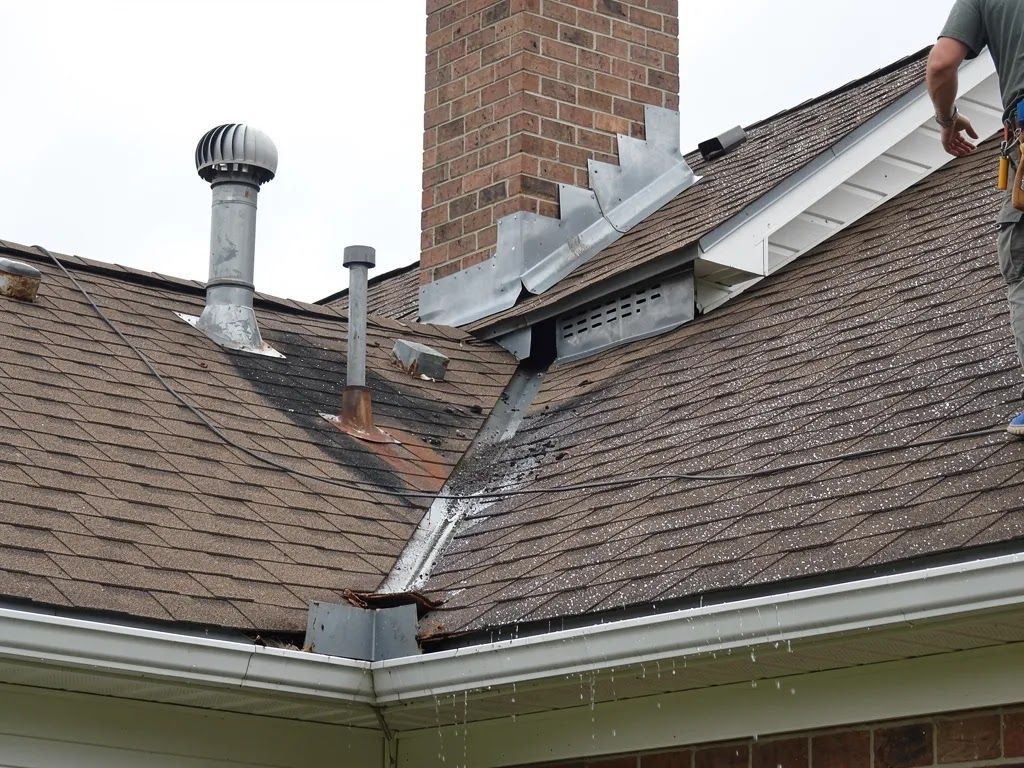
Roof slopes shed water easily across flat planes of shingles. Rain hits the roof, rolls down the gravel surface, and drops into your aluminum gutters.
The real trouble starts wherever that flat roof surface gets interrupted.
Pipes stick out. Walls meet shingles. Chimneys punch through the rafters. Dormers stick up to catch the morning sun.
Technical installation guidance from the
National Roofing Contractors Association points out that metal flashing serves as the main barrier against moisture at every roof junction and penetration. When you have a solid sheet of shingles, water just glides right over it. But when you cut a six-inch hole through the plywood deck so a three-inch white PVC bathroom vent pipe can stick out, you have created a direct gateway for water to reach your ceiling joists.
Think about our Georgia summers. In July, direct sun beats down on dark gray shingles in Sugar Hill until the surface climbs past 150°F. The wooden rafters bake. The metal flashing heats up and expands quickly. The PVC pipe warms up and shifts. Then an afternoon thunderstorm rolls in off Lake Lanier, dropping the temperature by thirty degrees in fifteen minutes while dumping two inches of cold rain.
All those different materials expand and shrink at completely different speeds.
Movement creates gaps.
Over five or six summers of that continuous thermal tug-of-war, the factory seal around the pipe collar pulls apart, or a small steel roofing nail backs out of the wood decking by an eighth of an inch. Rain catches that tiny opening, slips underneath the felt underlayment, and starts traveling along the underside of the plywood until it finds a drywall seam above your upstairs hallway.
The main failure points on Sugar Hill homes
In North Georgia, residential roofs face a specific mix of heavy tree canopies, intense humidity, blazing summer sun, and sudden winter freezes. These four trouble spots cause almost every leak call we receive:
Plumbing pipe collar boots
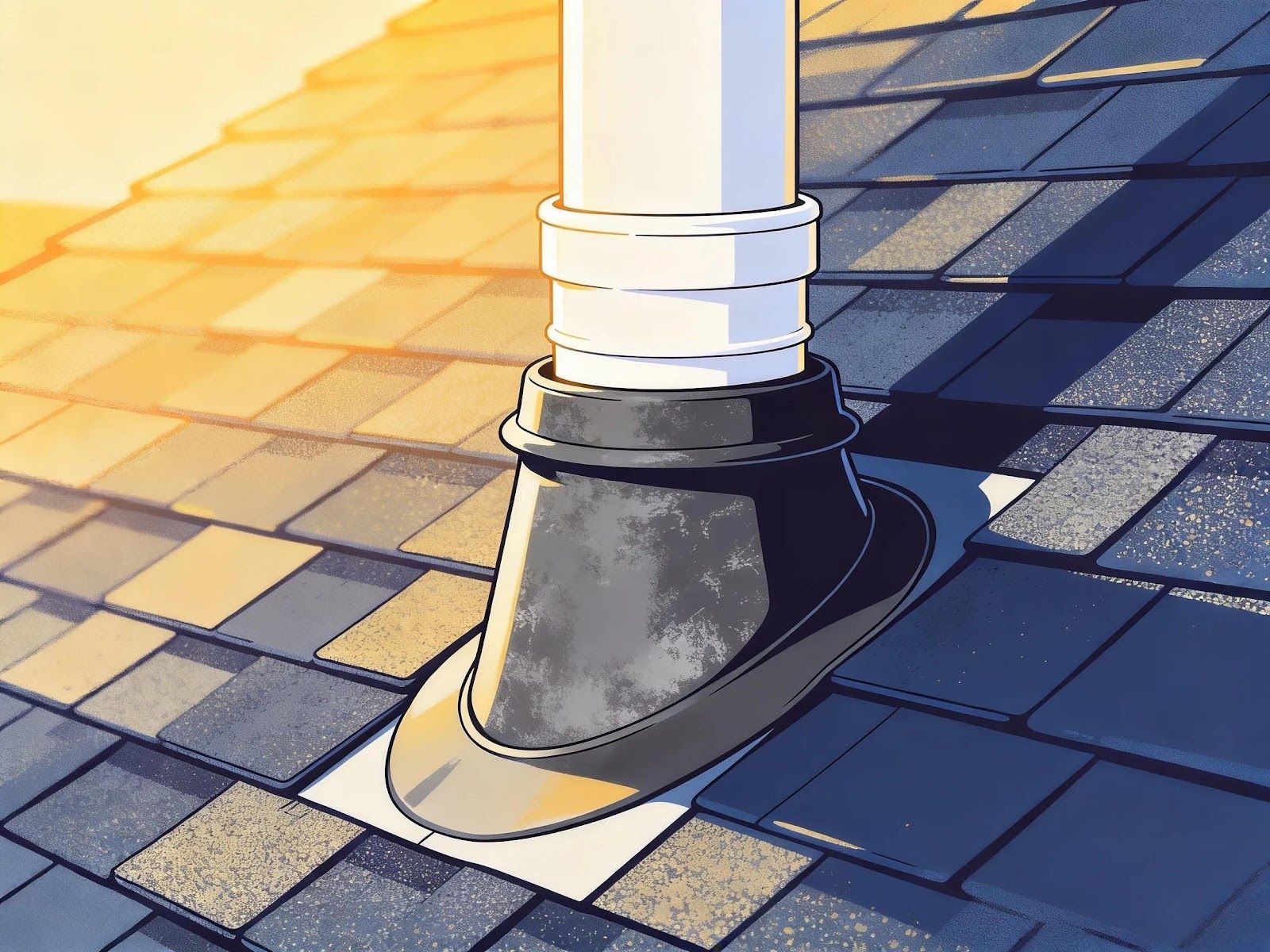
Every house has PVC plumbing pipes running up through the attic to vent sewer gas out through the roof. Builders slide a square base flashing over each pipe, featuring a round rubber gasket molded into the middle to hug the pipe tightly.
Architectural laminate shingles easily last twenty-five or thirty years if the attic has decent ventilation. Standard builder-grade neoprene rubber boots do not last nearly that long.
Long-term weathering research by the
Insurance Institute for Business & Home Safety shows that intense ultraviolet radiation and high roof surface heat break down organic binders and rubber compounds far faster than the surrounding fiberglass-asphalt composite base. In our climate, standard rubber boots bake in the sun until they turn chalky and stiff.
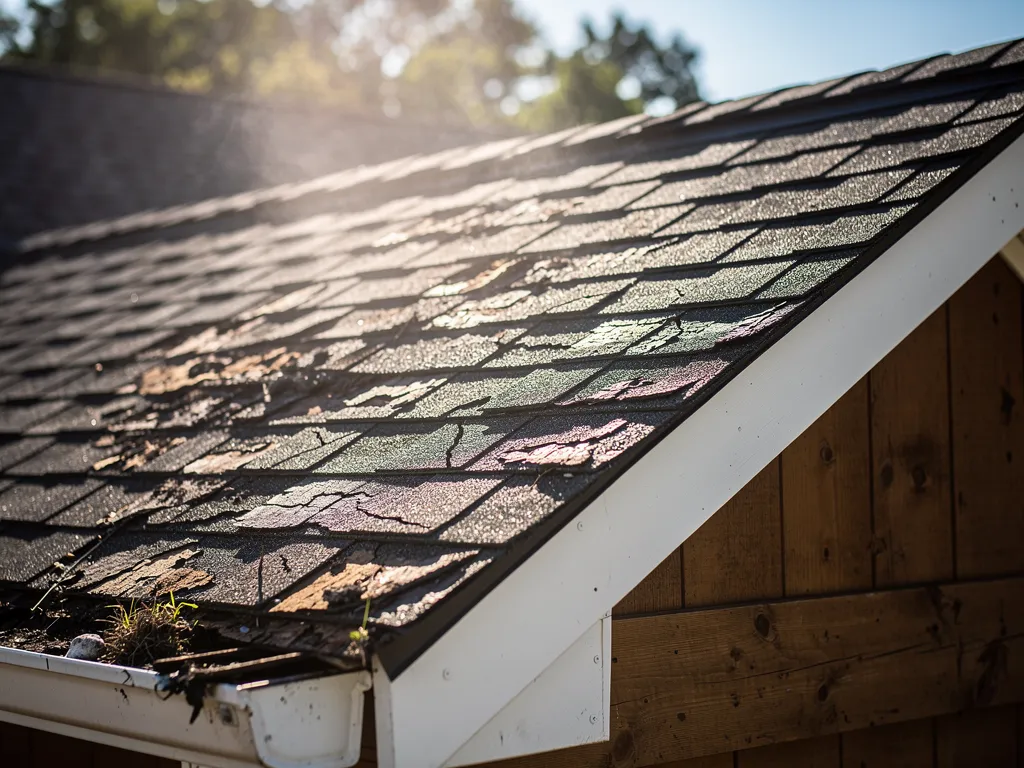
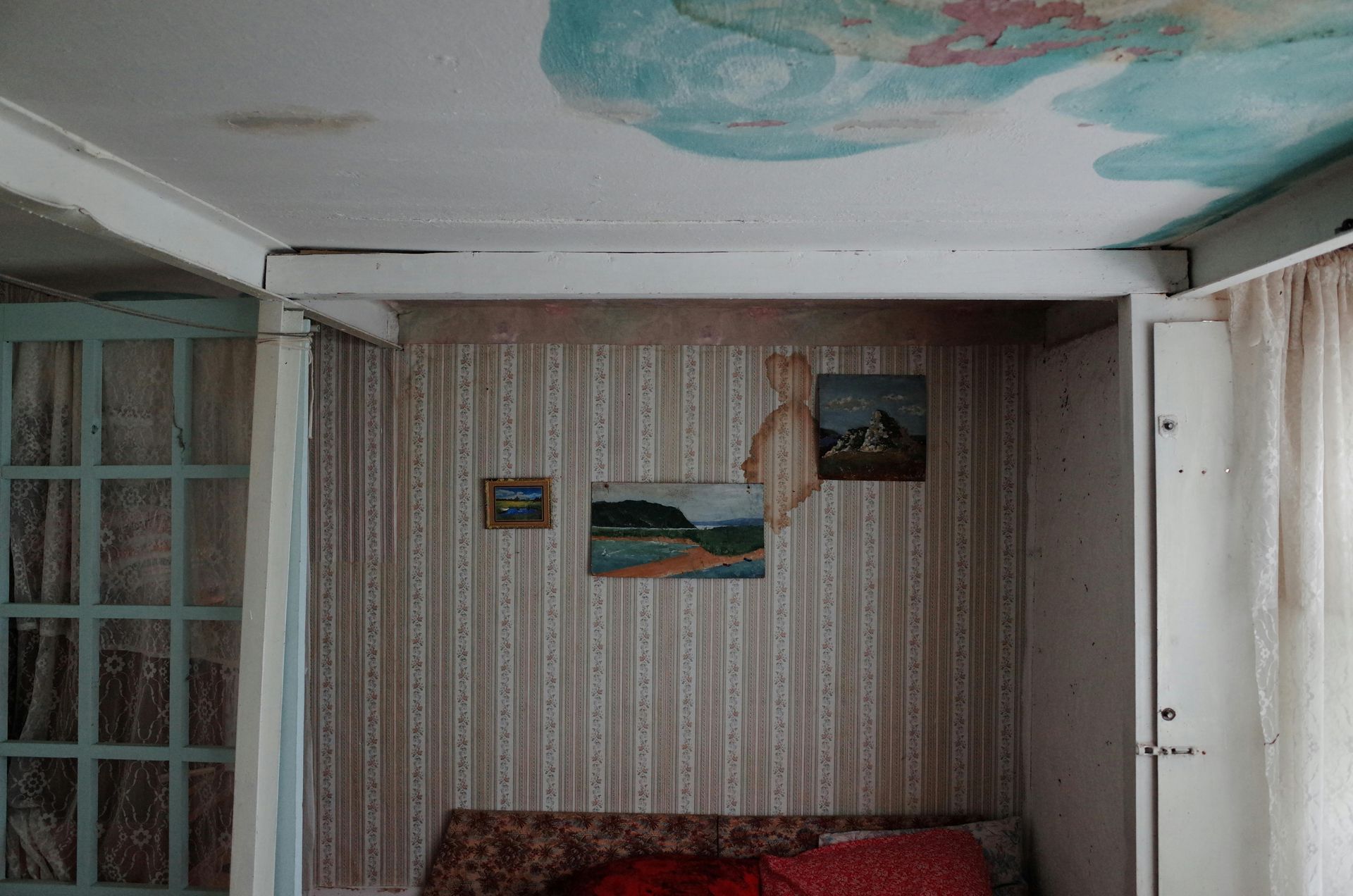
Within six or seven years, the rubber loses its stretch. A hairline split forms on the uphill side of the collar. It looks tiny from the ground, maybe the size of a fingernail. But every time it rains, water trickles down the outside of the white PVC pipe, runs straight through the attic insulation, and leaves a brown, ring-shaped water stain on the ceiling sheetrock right below the bathroom.
Valley troughs choked with pine needles
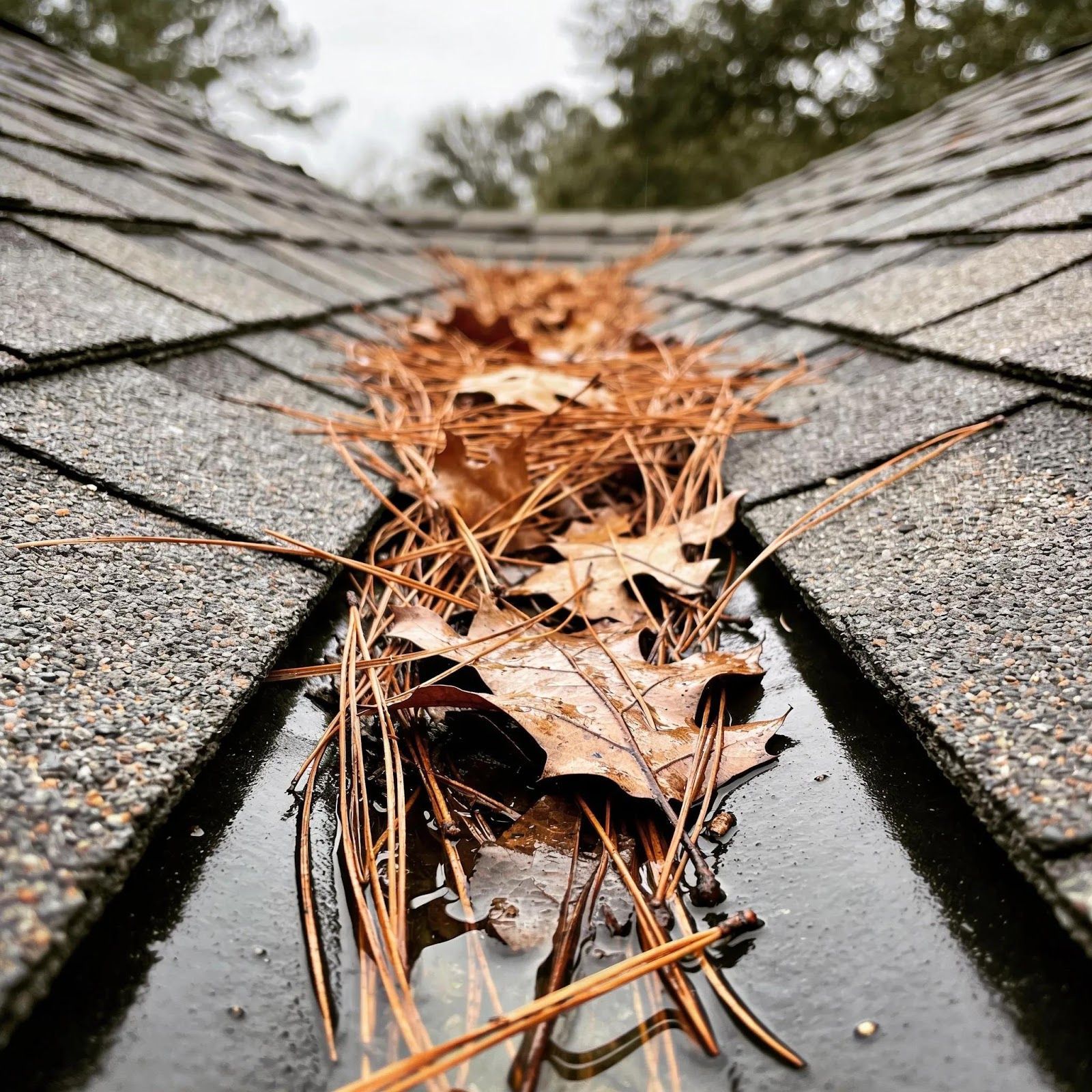
A roof valley is where two different roof slopes meet inside an angle, like a crease in a folded piece of paper. Valleys carry massive amounts of water during a downpour.
Loblolly pines and water oaks drop heavy loads of pine straw, acorns, twigs, and leaves into those valley troughs every autumn. If you do not blow those valleys clean, the pine needles pack down into a thick, soggy mat that holds moisture like a sponge.
When heavy rain rushes down the roof slope, that pine straw dam blocks the water from draining into the gutter. Water pools up against the blockage. Because shingles are designed only to shed water running straight downhill, standing water starts creeping sideways underneath the shingle edges through capillary draw. After two seasons of water sitting against the valley centerline, the underlying felt paper rots through, and the plywood sub-decking turns into soft, spongy wood that gives way under foot pressure.
Chimney step and counter flashing
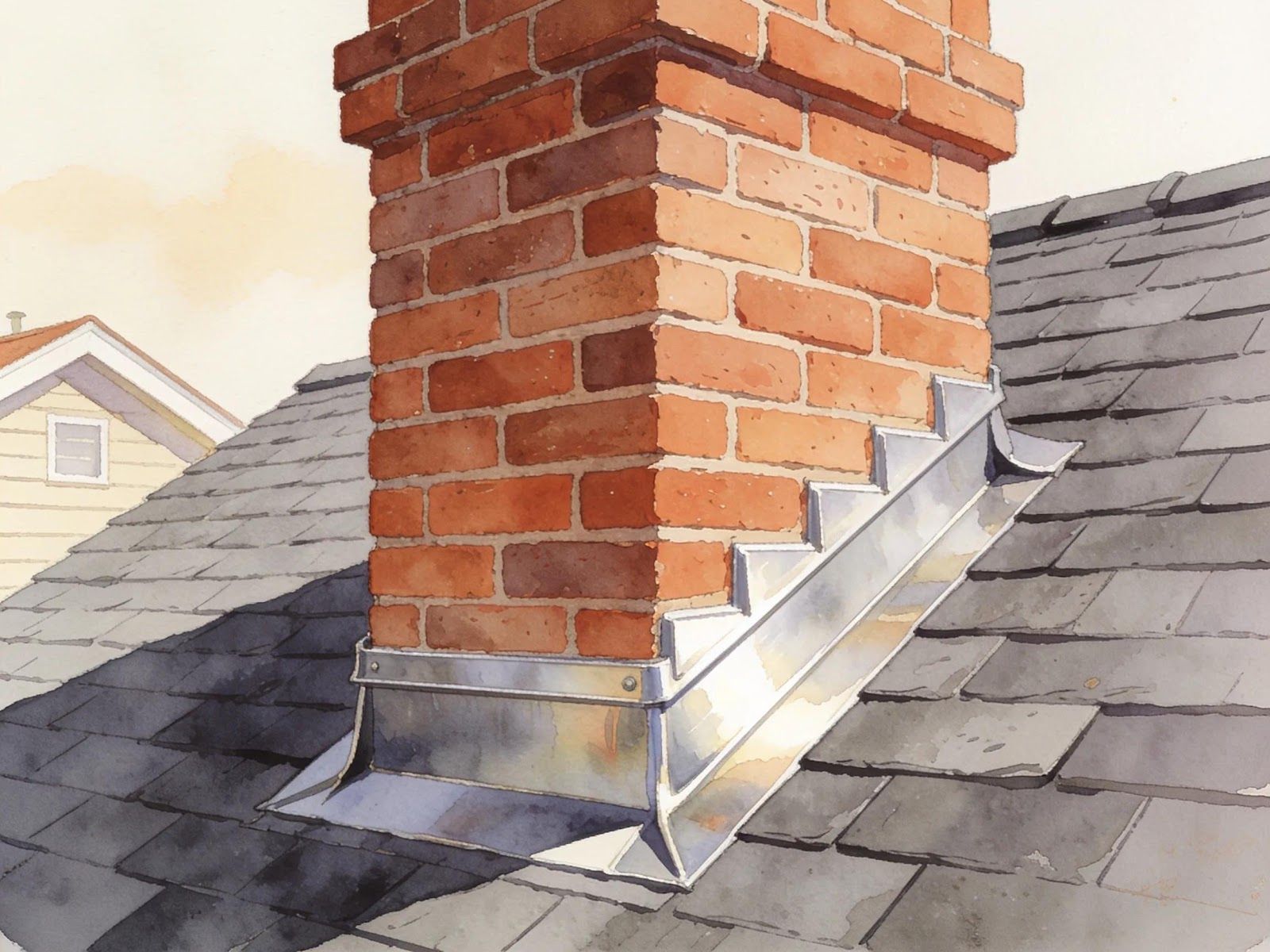
Brick chimneys on older homes in neighborhoods around E.E. Robinson Park or downtown Sugar Hill take a severe beating from Georgia weather.
Where the flat roof meets the vertical brick wall, roofers install small, L-shaped pieces of galvanized metal called step flashing, weaving each metal card under an individual shingle. Then they cut a narrow groove into the brick mortar joint and tuck in counter flashing to hang down over the step flashing like an apron.
Over ten or twelve years, the mortar in that chimney joint weathers away, loose brick sand washes out, and the counter flashing pulls out of its groove. Sometimes a previous contractor used cheap roofing cement to glue the metal to the brick instead of cutting a proper reglet groove. As soon as that dried mastic cracks, wind-driven rain hits the vertical chimney face, runs down behind the metal flashing and drips directly onto the wooden framing around the fireplace hearth.
Wall transitions and dormers
Any spot where a roof meets a second-story siding wall or a front dormer needs clean step flashing. If the original installer drove nails too close to the corner or forgot to kick out the bottom piece of flashing into the gutter, water runs down behind the siding trim boards, soaking your exterior wall insulation and causing peeling paint on interior bedroom walls.
Comparing common roof leaks and permanent repairs
Matching the interior symptom to what is actually broken on the roof deck saves you from wasting money on quick fixes that fail during the next downpour.
| Roof Component | Visible Interior or Exterior Symptom | Physical Root Cause | Umbrella Roofing Permanent Fix |
|---|---|---|---|
| Plumbing Pipe Boot | Water rings around bathroom or laundry room ceiling | Rubber collar turned brittle from sun and split along pipe neck | Pull surrounding shingles, install heavy silicone or lead boot, nail fresh shingles |
| Chimney Flashing | Damp attic framing near chimney or wet brick around fireplace | Mortar groove cracked open or counter flashing separated from brick | Saw-cut clean mortar joint, bend custom metal, seal with polyurethane |
| Roof Valley | Dark stains along bottom edges of roof decking near gutters | Pine needle dam holding water and forcing it sideways under shingles | Clear debris, replace damaged shingles, install ice-and-water underlayment |
| Wall Step Flashing | Peeling paint or soft drywall along upper-floor exterior walls | Rusted flashing cards, lifted nails, or missing kickout diverters | Remove bottom siding boards, install new metal cards, water-seal the seam |
Why smearing caulk over flashing causes worse damage
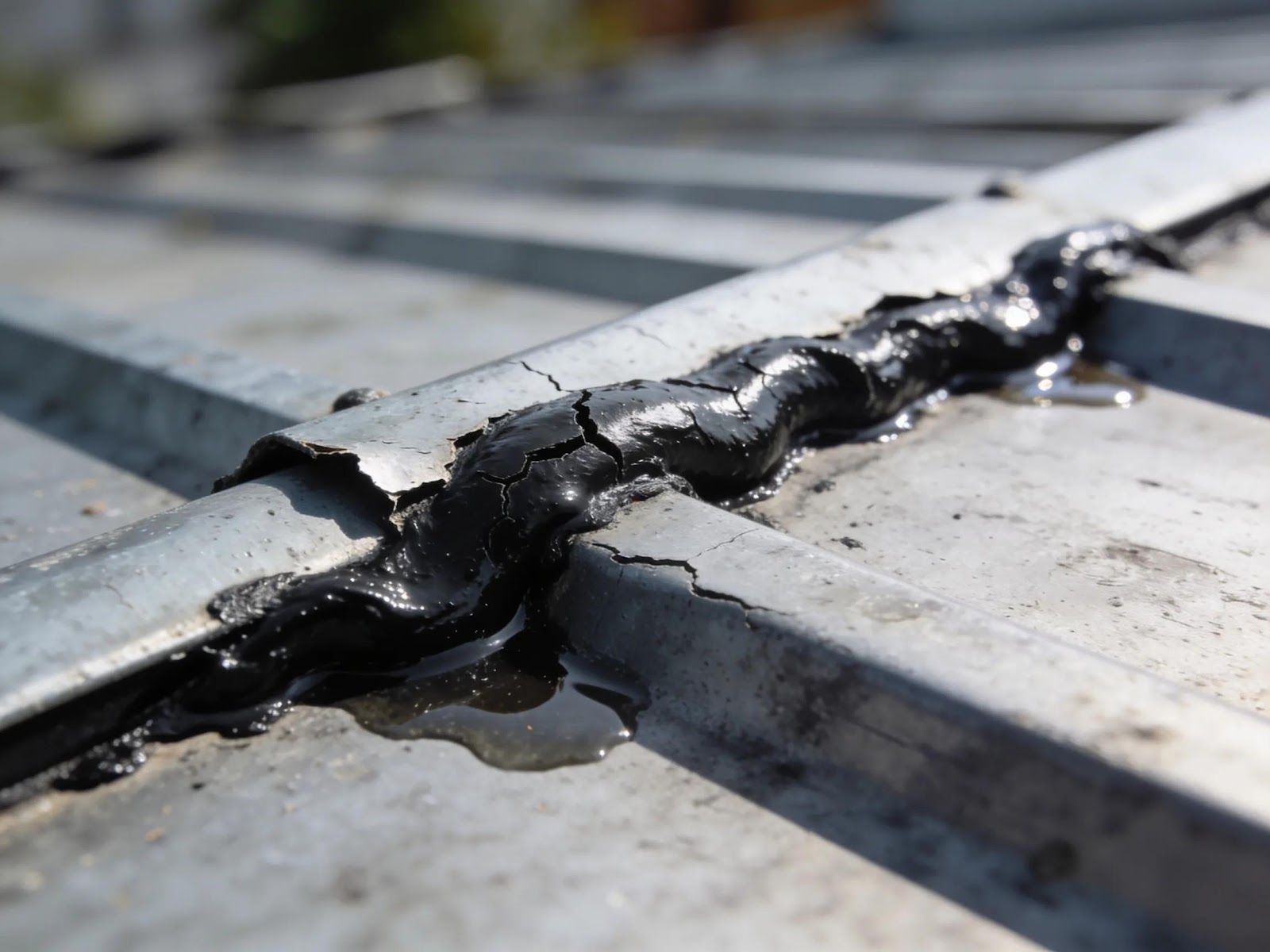
When a leak shows up, many homeowners grab a ladder, a tube of black roofing tar or clear silicone caulk from the hardware store, and smear a thick layer across the metal flashing.
It feels like a quick, cheap solution. It might even stop a light shower the following Tuesday.
In my experience, topical caulking is often the worst thing you can do to metal flashing.
Roof flashing works purely on gravity and overlapping layers. When water hits a properly layered joint, it drains down the metal, over the shingle, and off the roof edge. When you spread thick caulking over the exterior seam, you create an artificial dam.
Water that gets behind the metal can no longer drain out.
Instead, moisture gets trapped tight against the wooden roof deck. Because the water cannot dry or evaporate, it sits on the plywood, accelerating fungal rot and weakening the roof sheathing.
Direct Georgia sunlight breaks down standard hardware store silicone in three or four months. The caulk hardens, shrinks, and splits wide open. You end up with an ugly, gummy black mess that holds water like a bucket, making the eventual structural repair more expensive because a technician has to scrape away the gunk and replace rotted deck boards before installing fresh metal.
A lasting repair always requires mechanical work. We carefully pop the nail heads on the overlapping shingles, remove the cracked or corroded metal piece, inspect the raw wood decking underneath for rot, lay down a fresh self-adhering water barrier, install new custom-bent flashing, and hand-fasten the shingles back into their original pattern.
A safe four-point check you can do yourself
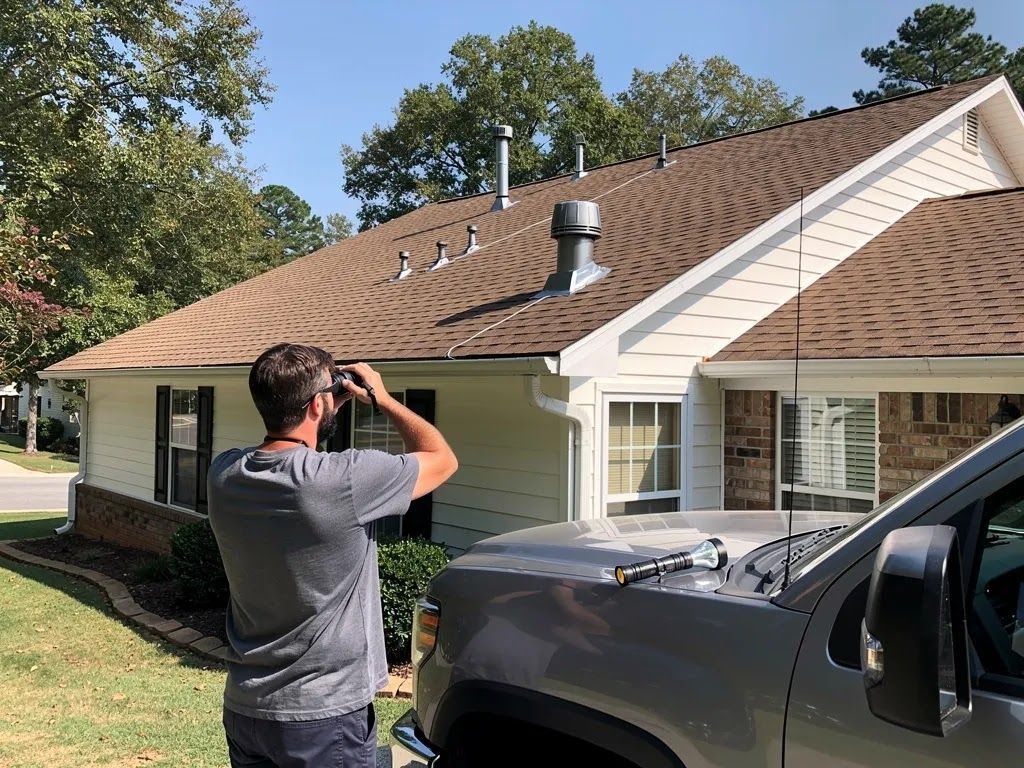
You do not need to walk around on a steep, slippery roof pitch to check on your home's health. In fact, stepping on brittle shingles during summer heat can crack the tabs and loosen protective mineral granules.
Grab a pair of binoculars and a flashlight to run this simple four-point check:
- Scan vent boots from the yard. Walk into your driveway or front lawn on a bright afternoon. Use binoculars to look at the plumbing pipe boots on your back and side roof slopes. Look closely at where the black rubber collar wraps around the white plastic pipe. If you see jagged tears, horizontal cracking, or rubber pulling away from the pipe, that boot is failing and needs attention before heavy rains hit.
- Check valleys for tree debris. Look up into the roof valleys where different roof sections meet. If you see piles of brown pine needles or dark leaf buildup sitting in the trough, clean water flow is blocked.
- Trace moisture along attic rafters. Head up into your attic on a rainy afternoon with a bright flashlight. Step carefully only on wooden walkway boards or structural ceiling joists. Shine the beam along the angled rafter boards supporting your plumbing vents, exhaust fans, and chimney. Look for dark streaks, white mineral powder, or rusty nail tips. Water often enters at a high joint and runs ten feet down a rafter before dropping onto the sheetrock.
- Inspect chimney brick lines. Check the metal strips running along the sides of your chimney. If the metal looks bent, pulled away from the brick face, or covered in peeling layers of old black tar, water is likely sneaking behind the masonry.
If you spot damp spots or rotted decking in your attic framing, check out our Sugar Hill service page to learn more about how our crews handle local roof architectures.
What to expect during an Umbrella Roofing service call

When you call Umbrella Roofing for a leak diagnostic in Sugar Hill or anywhere across Gwinnett County, here is how we handle your home:
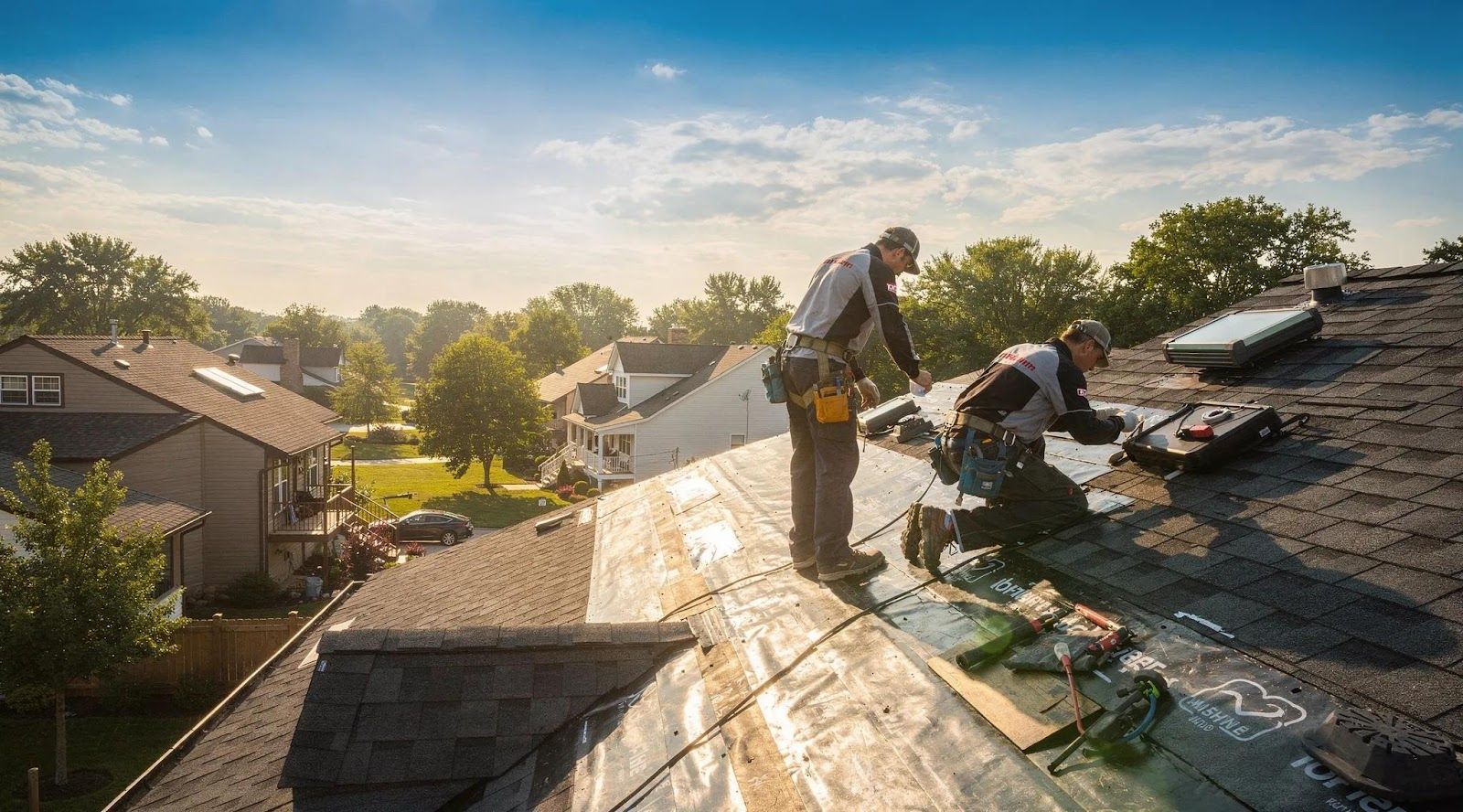
- Hands-on inspection of roof and attic. A licensed roofing technician climbs up to check all pipe boots, wall flashing cards, valleys, and chimney reglets. We check the attic rafter framing beneath those spots to confirm the exact leak path.
- Clear photo proof. We do not expect you to take our word for anything. We take clear, high-resolution pictures of every split rubber boot, lifted nail, rusted flashing piece, and soft decking board so you can see the issue clearly.
- Itemized, fixed pricing. You get a clear, written proposal detailing the exact labor, materials, and steps needed to fix the problem. Our quotes are good for thirty days. We give you a straightforward price with zero hidden fees and no pushy sales pitches to buy a whole new roof when a repair is the sensible answer.
- Clean and careful jobsite cleanup. When we finish a repair, our field crew runs heavy magnetic sweepers across your driveway, lawn, and flowerbeds to collect loose roofing nails, picks up scrap shingle pieces, and hauls away all old metal components.
For more background on maintenance schedules and seasonal checks, feel free to read through our roofing company blog guides.
Taking care of joint leaks before the next downpour
Fixing a cracked rubber vent boot or resetting loose chimney flashing costs a fraction of what you would pay to tear out moldy attic insulation, replace sagging ceiling drywall, and re-sheet rotted plywood rafters.
Most targeted flashing repairs take our team two to three hours to complete. Once the new metal and water barrier are in place, your roof is sealed tight and ready for whatever stormy weather rolls through North Georgia.
If you noticed a small water ring on your ceiling, spotted cracked pipe collars from your yard, or just want to make sure your roof joints are solid before storm season, give our local Sugar Hill team a call. You can
schedule a free roof inspection today, and we will come out to give you a straight, honest assessment of your home.
About the author
Samuel Galperin is the founder and lead roofing specialist at Umbrella Roofing, LLC, located at 4988 W Broad St NE in Sugar Hill, Georgia. He focuses on residential shingle repair, commercial flat roofing, and honest roof diagnostics throughout Gwinnett, Forsyth, and Hall counties. Samuel started Umbrella Roofing to provide North Georgia homeowners with clear itemized pricing, clean jobsites, and straightforward advice without high-pressure sales tactics.