How Georgia summer heat affects asphalt shingles: What Sugar Hill homeowners should check before rainstorms
Long before water ever drips through a living room ceiling, extreme weather quietly undermines the most critical barrier protecting your home, creating invisible vulnerabilities that remain completely hidden during clear summer afternoons. Most homeowners assume everything overhead is fully secure until the first torrential downpours strike, which is why identifying subtle seal failures early and consulting trusted local specialists for timely roof repair can prevent minor atmospheric wear from turning into severe structural damage as seasonal weather shifts.
TL;DR: Executive summary and immediate action
- Georgia's summer heat subjects asphalt shingles to extreme expansion and contraction cycles, loosening protective granules and splitting rubber pipe boots.
- Unaddressed thermal degradation leads to sudden ceiling stains and attic leaks when late-summer thunderstorms sweep across North Georgia.
- Homeowners can spot early warning signs safely from the ground by checking downspout splash blocks, pipe collars, and shingle edges.
How summer heat weakens asphalt shingles and flashing
Roofing materials in Sugar Hill face high thermal loads between May and September. When outdoor temperatures pass 90°F, surface temperatures on dark architectural shingles routinely reach 150°F during peak afternoon sun, according to roof thermal research from the U.S. Department of Energy. This solar heat causes physical changes across your shingles, underlayment, and roof penetration seals.
Volatile compound depletion in asphalt substrates
Asphalt shingles stay flexible because of petroleum oils added during manufacturing. Direct ultraviolet light bakes these oils out of the shingle layer over time. As asphalt loses these oils, shingles grow stiff and brittle. When heat causes the roof deck to expand during the day and contract at night, brittle shingles crack along stress lines.
Granule separation and UV shield decay
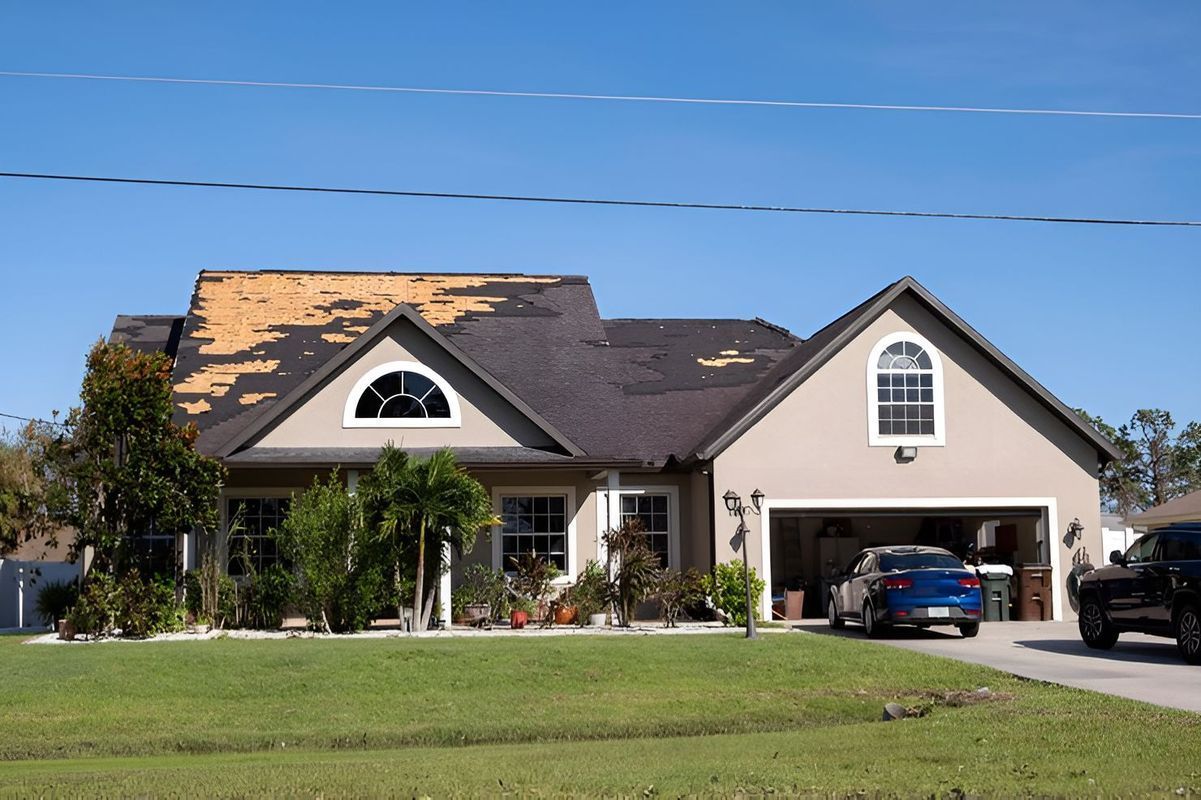
Ceramic-coated mineral granules form the outer protective layer that shields asphalt from direct sunlight. High surface heat softens the asphalt binder holding these granules in place. Rain washing over softened binders carries loose granules away into your gutters. Exposed asphalt mats dry out quickly under direct sun, which speeds up surface erosion.
Differential expansion across flashing interfaces
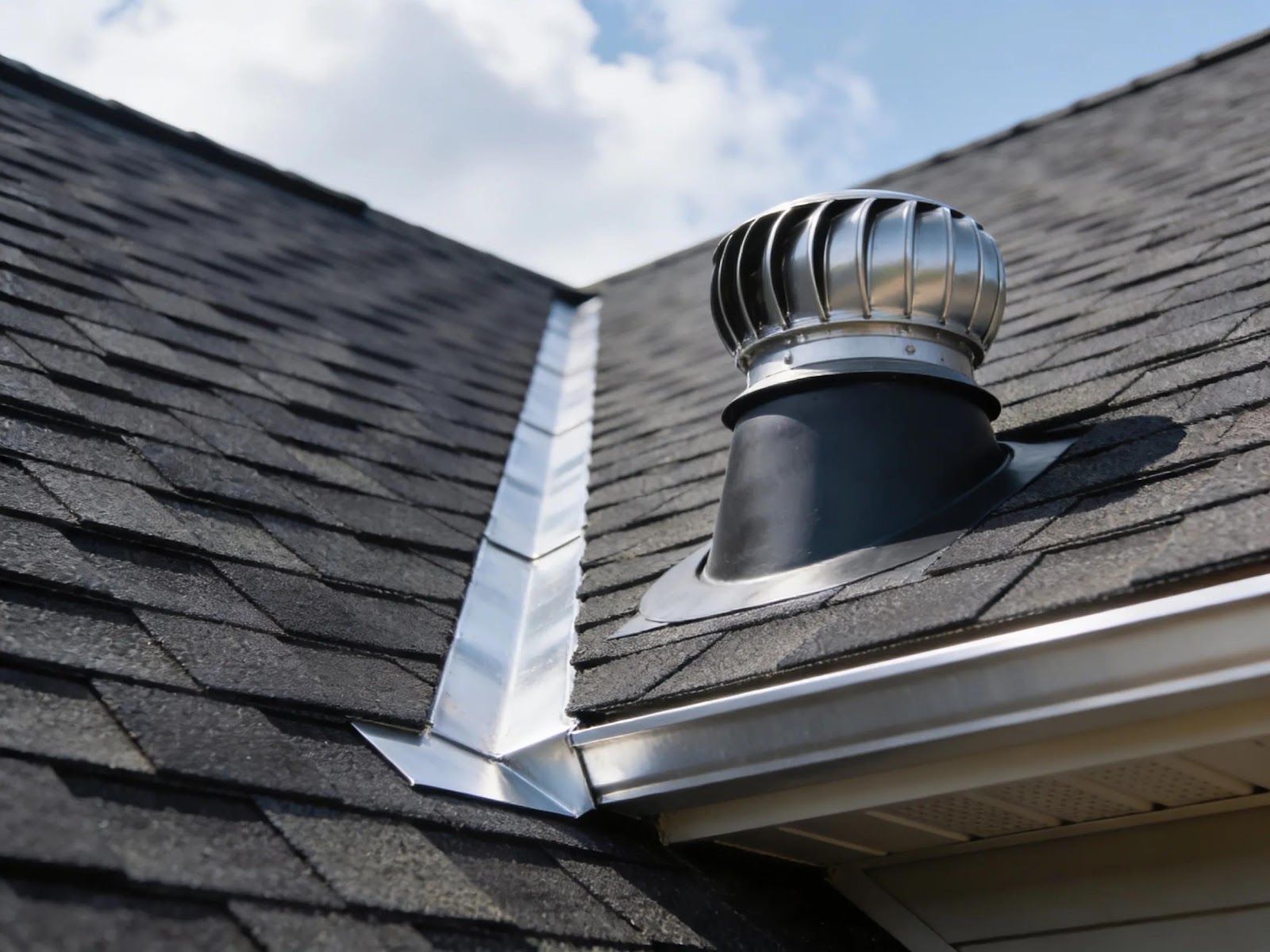
Roofing systems rely on metal step flashing and rubberized seals around chimneys, sidewalls, and plumbing vents. Sheet metal expands and contracts much faster than asphalt shingles or wood framing. This uneven movement puts stress on caulking joints and pulls polyurethane sealants away from brick and siding seams.
4 things Sugar Hill homeowners must check before late-summer storms
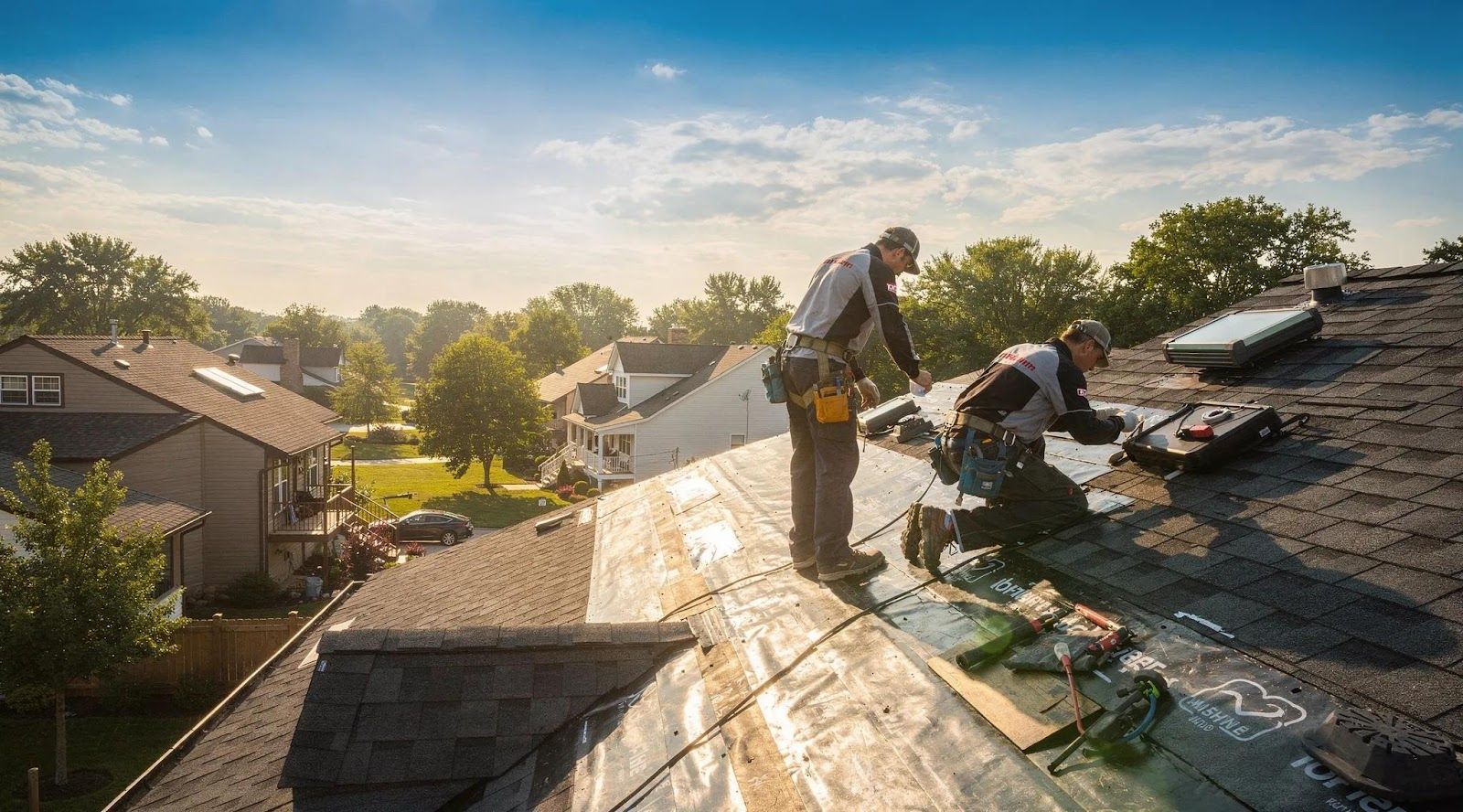
You can check your roof safely from the yard using binoculars or your smartphone camera. Based on Umbrella Roofing's fieldwork in Sugar Hill and across Gwinnett County, a quick ground-level walkaround helps you catch heat wear before water gets into your home. Look for these four primary warning signs:
1. Inspect downspout outlets for heavy granule accumulation
Check your downspout splash blocks after a rain shower. A small dusting of granules is normal on newer roofs. Large piles of coarse, dark granules at your downspout exits show that the asphalt binder is breaking down. Dark patches on your shingles mean the UV shield is gone, exposing the fiberglass mat underneath to sun and water damage.
2. Check plumbing vent collars for cracked or split boots
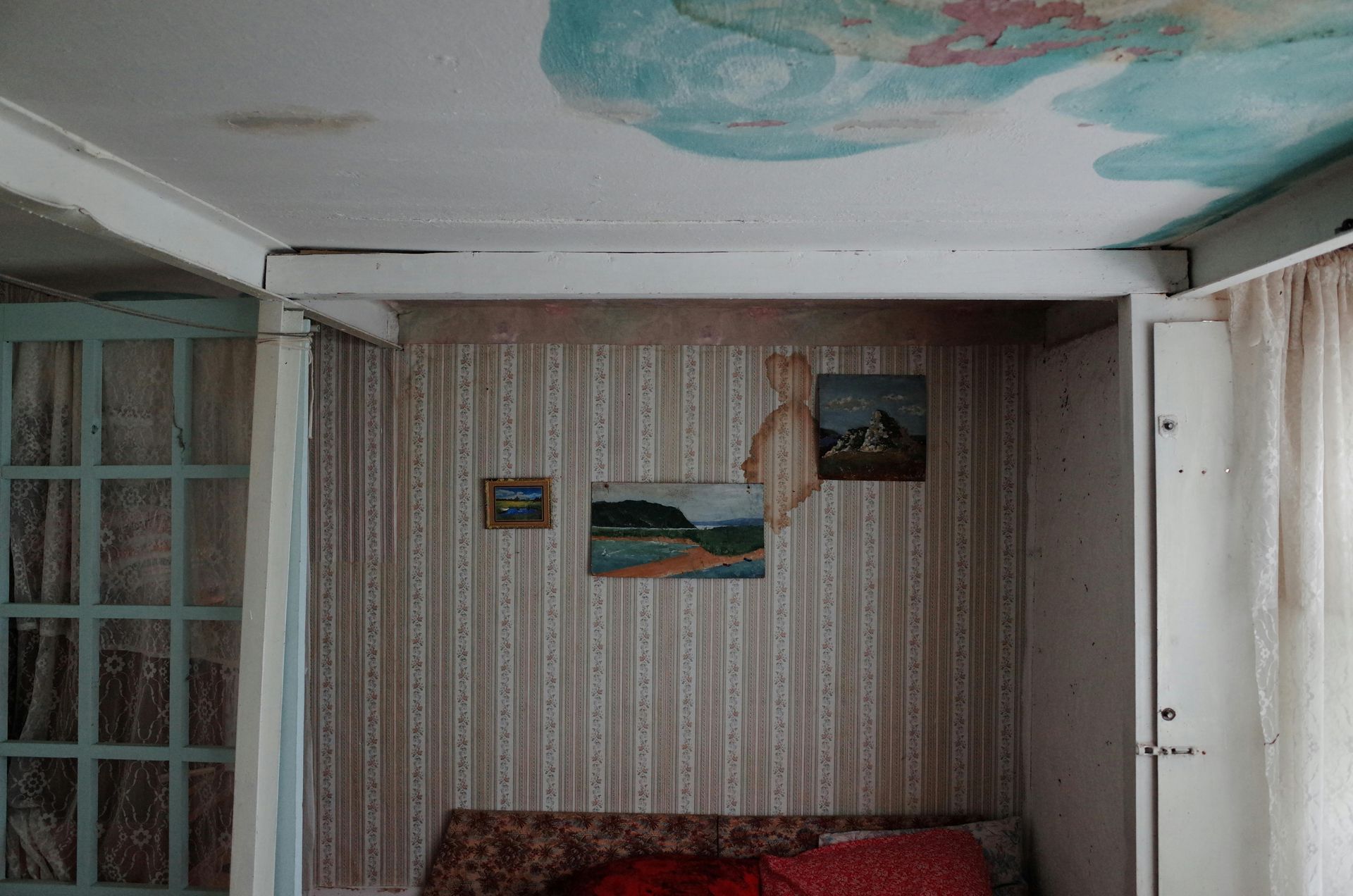
Plumbing vent pipes stick up through your roof deck to vent sewer gases. Flexible rubber boot collars seal the gap around these PVC pipes. Continuous sun exposure bakes the rubber, causing it to harden and crack. A split pipe boot lets rainwater run straight down the pipe casing into your attic insulation and ceiling.
3. Examine shingle profile for cupping and curling edges
Poor attic ventilation traps hot air under the roof deck, pushing heat up through the plywood into the underside of your shingles. When attic temperatures cross 160°F, heat dries out the shingle backing. This causes shingle edges to curl upward or cup in the middle. Curled edges give high winds something to grab during summer storm fronts.
4. Audit roof joints for lifted step flashing and sealant failure
Look closely at wall seams, chimney bases, and roof valleys. Solar heat breaks down caulking and pulls metal flashing away from siding. Gaps along mortar lines, rusted metal, or peeling sealant mean water can slip past during a heavy downpour.
Why early patching prevents total roof replacement
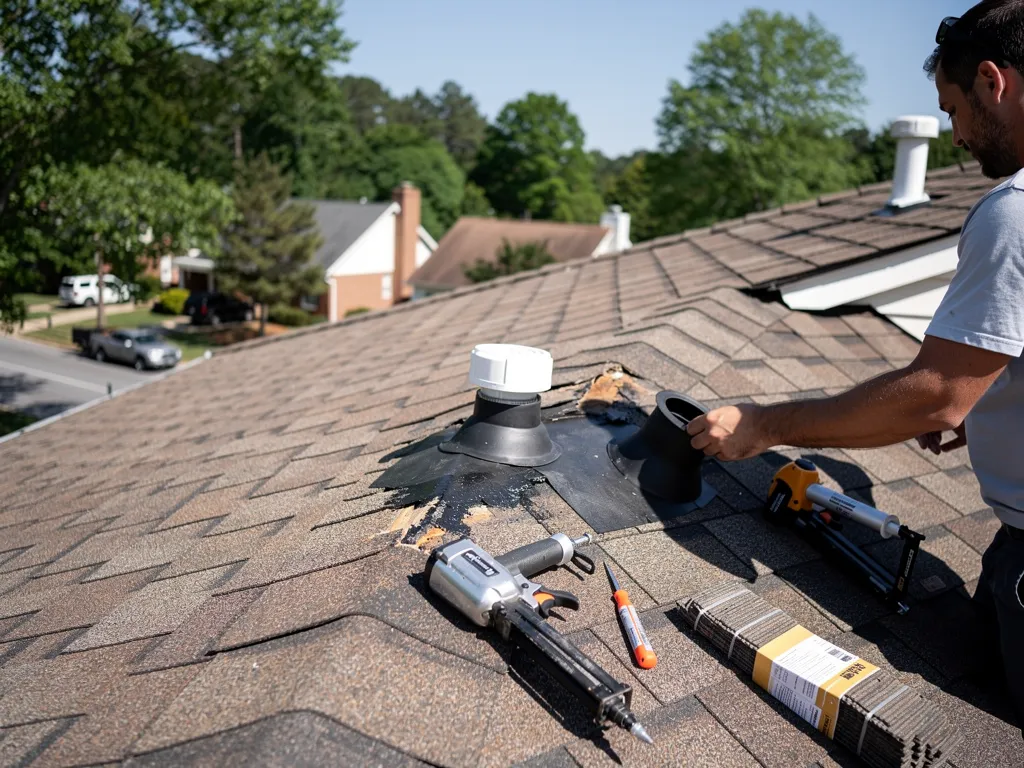
Taking care of minor heat wear right away keeps your roof deck dry and saves you from expensive repairs down the road. Leaving small leaks unaddressed gives water time to cause structural damage:
- Replacing a cracked pipe boot or securing loose flashing keeps rainwater from soaking your plywood roof deck, which prevents wood rot and keeps your roof structure solid.
- Stopping leaks early protects your attic insulation from getting wet and losing its insulating value, while preventing mold growth in damp ceiling spaces, which can begin within 24 to 48 hours according to the U.S. Environmental Protection Agency.
- Documenting routine maintenance keeps your roof in good standing with your home insurance provider if severe wind or hail strikes North Georgia later in the season.
What to expect during an Umbrella Roofing diagnostic inspection
Umbrella Roofing provides clear, thorough roof checkups for homeowners and business owners across North Georgia. Our licensed contractors follow a straightforward 4-step evaluation on every job site:
1. Complete perimeter elevation audit
Our technicians check your eaves, soffits, fascia boards, and gutter alignment from the ground and ladder level. We look for sagging gutters and water stains along fascia boards.
2. Surface and component integrity check
We perform a hands-on check of shingle flexibility, granule loss, valley flashing, step flashing, ridge vents, skylights, and plumbing boot collars.
3. Attic moisture and airflow analysis
Our team checks your attic ventilation airflow. We inspect the underside of the roof deck for water marks, rusty nails, or compressed insulation.
4. Transparent itemized estimate
You get an itemized quote listing exact materials, repair steps, and labor costs. All Umbrella Roofing estimates are valid for 30 days with fixed pricing and no hidden fees.
Protect your Sugar Hill home before late-summer rainstorms hit
Protect your home from water damage by catching thermal wear early. Umbrella Roofing provides fast, family-owned service across Sugar Hill, Buford, Suwanee, and Gwinnett County. Our licensed crews offer free same-day inspections and 24/7 emergency leak response.
Homeowners can easily
request an itemized roof quote or browse our
roofing care blog for additional seasonal home maintenance guides.
About the Author
Samuel Galperin is the founder and licensed roofing contractor at Umbrella Roofing, headquartered in Sugar Hill, Georgia. With extensive hands-on field experience in residential architectural shingle systems, commercial flat roofing (TPO/PVC/EPDM), and North Georgia storm restoration, Samuel leads a team of dedicated local roofing specialists committed to jobsite safety, precision craftsmanship, and zero-hidden-fee transparency.
Roof repair in Sugar Hill: why 80% of leaks start at joints and flashing (and how to fix them early)